

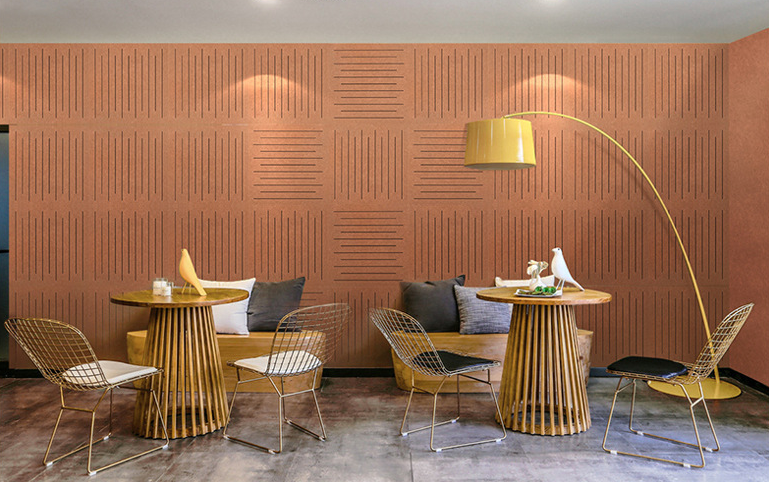
The role of acoustic materials in interior spaces has changed significantly in recent years. Acoustic panels are no longer viewed solely as technical products for sound management. Instead, they have become an important design element widely used in modern commercial and residential interiors.
As interior design trends continue to move toward clean architectural lines and multifunctional spaces, decorative acoustic panels offer an effective way to improve both acoustic comfort and visual appeal. Modern acoustic systems now include a wide variety of finishes, textures, colors, and installation styles that can seamlessly integrate into contemporary interiors.
Decorative upholstered wall panels, wood slat acoustic panels, suspended acoustic ceilings, and modular PET felt systems are increasingly popular in offices, hotels, educational buildings, entertainment venues, and luxury residences. These products help reduce echo, soften indoor noise, and create a more comfortable listening environment without compromising the overall interior design concept.
Design flexibility has become one of the key advantages of modern acoustic solutions. Panels can now be customized in different sizes, patterns, shapes, and finishes to match architectural styles and project requirements. Integrated lighting and geometric layouts are also becoming common features in high-end interior acoustic applications.
In addition to aesthetics, acoustic comfort is increasingly associated with productivity, communication quality, and user experience. Poor acoustics in open environments may lead to distraction, reduced concentration, and uncomfortable indoor conditions. Proper acoustic treatment helps create quieter, more balanced spaces suitable for work, learning, hospitality, and everyday living.
As global demand for functional and visually integrated acoustic solutions continues to grow, decorative acoustic panels are expected to play an even larger role in the future of interior architecture and modern building design.