

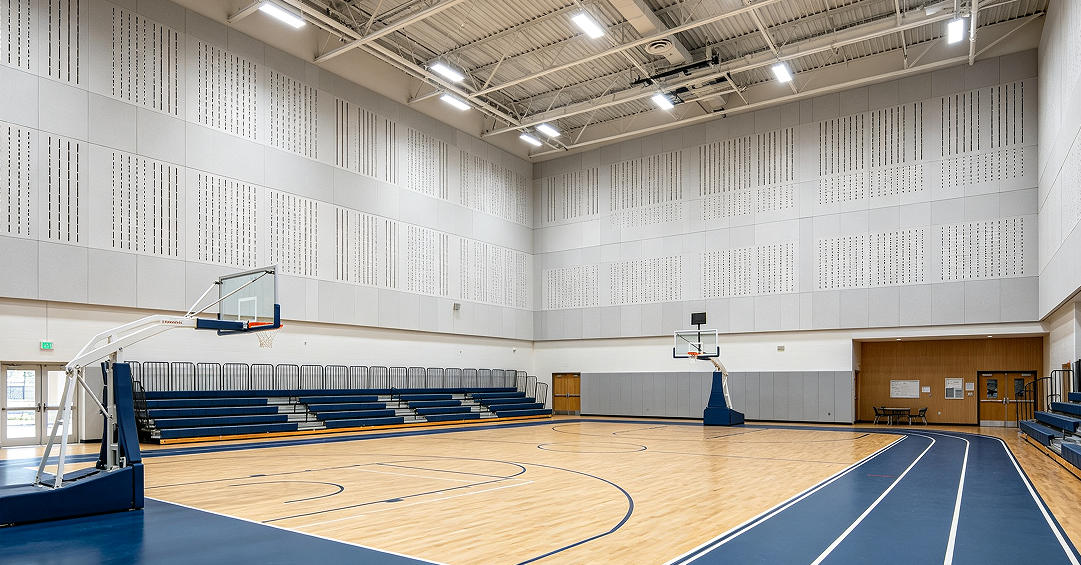
Updated global acoustic acceptance specifications for education buildings are fully implemented in 2026, marking mid-low frequency reverberation control as a mandatory inspection indicator for lecture halls, multi-purpose auditoriums and campus sports venues. Conventional porous acoustic materials show limited performance targeting 250Hz–1000Hz noise, driving wide adoption of grooved and perforated resonant acoustic panels for educational space renovations.
Designed based on the Helmholtz resonance principle, these wooden panels adopt precisely engineered hole and groove structures to absorb persistent mid-low frequency standing wave noise that standard porous boards struggle to eliminate. Equipped with rear air cavities and mineral wool backing, the overall NRC reaches up to 0.90 to deliver balanced full-band sound absorption and optimize overall venue sound field uniformity.
Light neutral wood veneer finishes fit the restrained, solemn aesthetic positioning of campus architecture. At present, numerous new campus construction and renovation projects worldwide list resonant acoustic panels as designated wall acoustic materials. Industry facility designers forecast that professional resonant acoustic boards will gain broader application as rigid acoustic standards for educational infrastructure take full effect.