

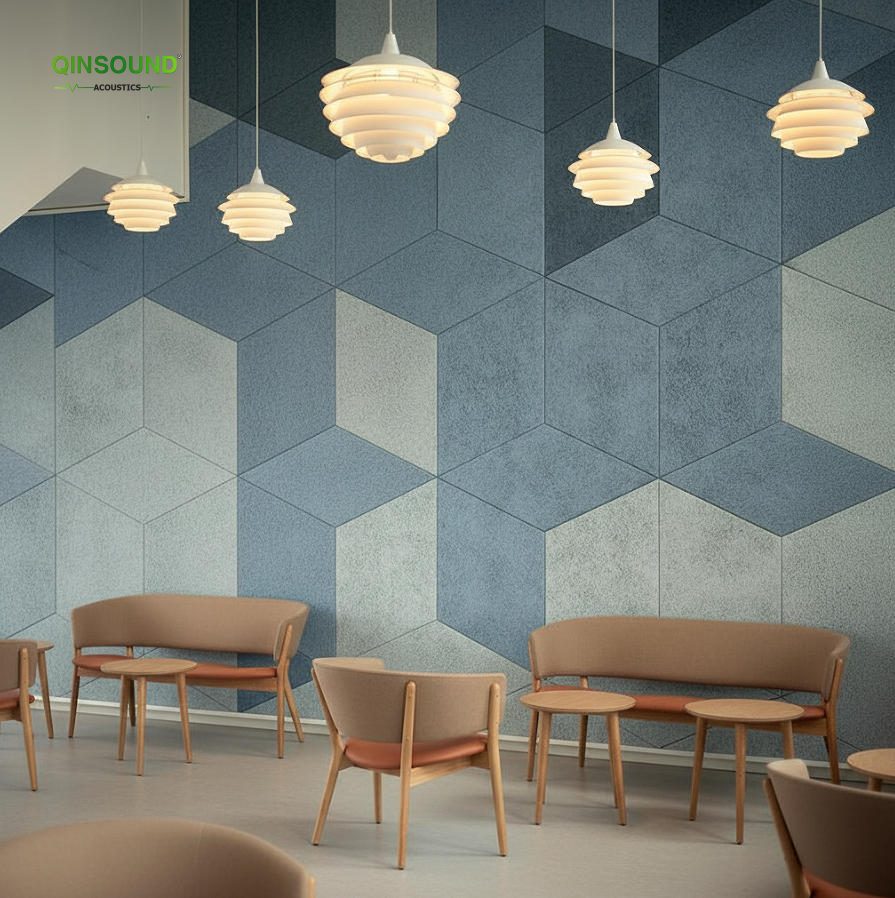
Against the background of the continuous evolution of commercial interior aesthetics, functional textured design has replaced flat and minimalist style as the core trend of high-end commercial space decoration in 2026. Data from multiple global design institutions shows that cement-bonded wood wool acoustic panels are widely used in boutique catering, brand retail, creative office and cultural exhibition spaces, with overall order volume increasing by 35% year-on-year in the first half of the year.
Different from traditional flat acoustic boards, wood wool panels retain the original natural texture of spruce fiber composited with cement, requiring no secondary paint or veneer treatment, and can be directly used as the final decorative surface. The open fiber structure achieves NRC 0.80–0.90 sound absorption performance, which can effectively solve the reverberation problem of high-ceiling commercial spaces while creating a natural layered visual effect. The material also has Class A fire resistance and excellent moisture stability, and can adapt to high-traffic commercial scenes with frequent temperature and humidity fluctuations.
Industry design reports indicate that the integration of acoustics and decoration has become a consensus in the design industry. Wood wool acoustic materials, which take into account natural texture, acoustic performance and environmental protection attributes, will continue to grow in the high-end commercial renovation market and become the core material for creating original architectural-style spaces.