


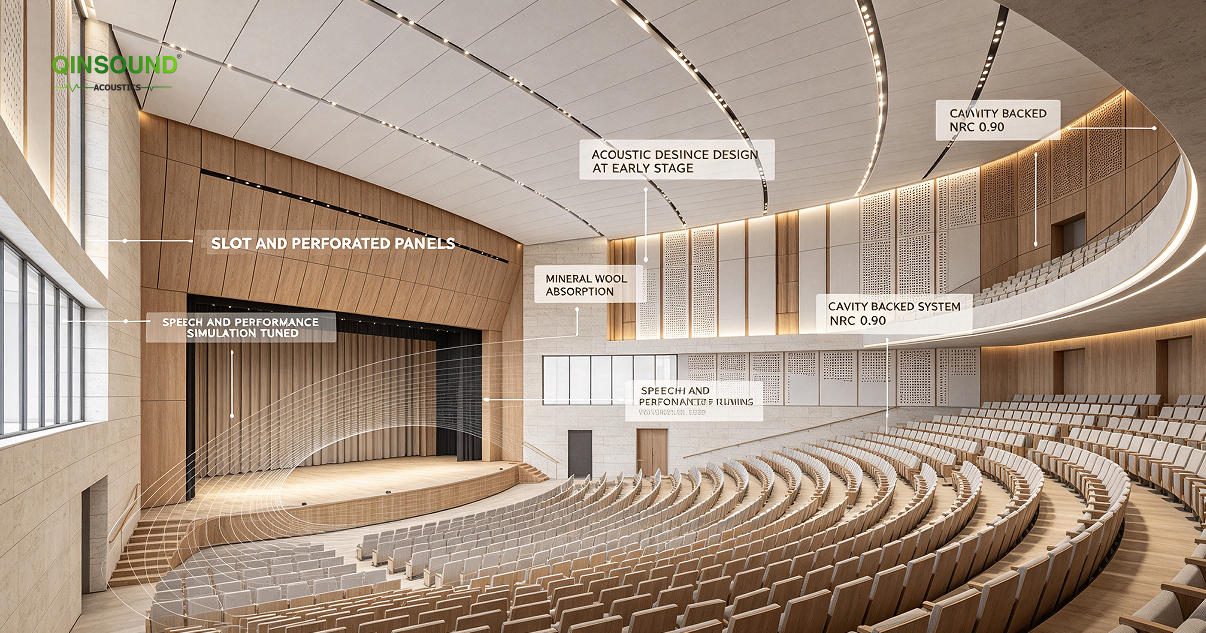
According to surveys by architectural associations in Europe and North America, acoustic design is shifting from post-construction retrofitting to early schematic design integration in cultural venues, auditoriums and campus buildings. More and more architectural firms incorporate acoustic performance indicators into the initial design phase, rather than adding acoustic treatment as a supplementary measure after the main structure is completed. This change is particularly evident in multi-function venues that need to balance speech and performance scenarios.
This shift puts forward higher requirements for the comprehensive capabilities of acoustic material suppliers. Suppliers with acoustic simulation capabilities, custom resonant panel production capacity and complete product matrices are gaining more say in the specification chain. The grooved and perforated resonant acoustic system, matched with mineral wool infill and rear air cavity structure, can precisely target the 250–1000Hz mid-low frequency standing wave problem common in large spaces through acoustic simulation calculation. The overall system achieves an NRC rating of 0.90, realizing balanced full-band sound absorption, and can meet the dual acoustic standards of speech and live music at the same time.
Industry research institutions predict that by 2028, more than 65% of medium and high-end public venue projects will complete acoustic scheme design at the schematic design stage. Acoustic material suppliers that can provide integrated design services such as simulation, customization and on-site tuning will further expand their market share.