

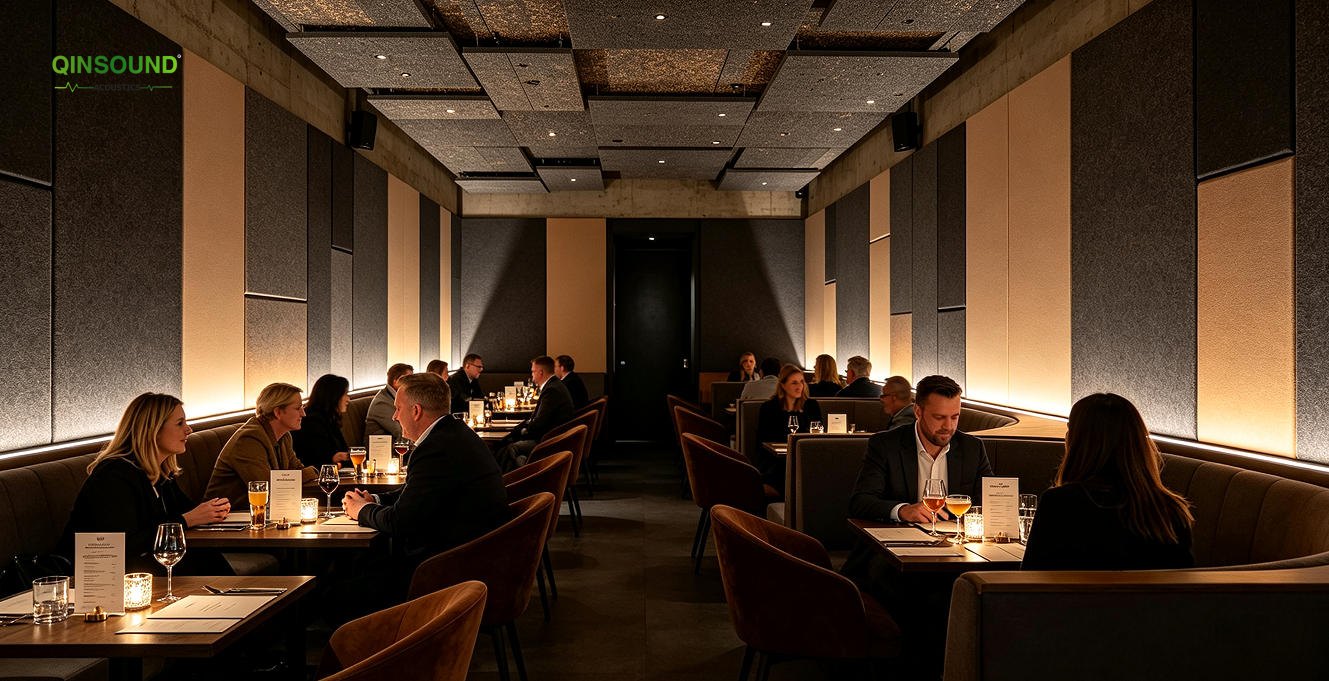
As global offline retail and catering industries shift from transaction-oriented to experience-oriented operations, brand stores, specialty restaurants and lifestyle venues are increasingly investing in full-scene sensory experience upgrades. Acoustic environment, as a key part of spatial atmosphere, has been upgraded from a basic functional configuration to a core element that shapes brand perception and affects customer dwell time. High-quality acoustic design can effectively reduce ambient noise, create a comfortable communication atmosphere, and indirectly extend customer stay time and consumption willingness.
Market monitoring data shows that the number of acoustic renovation projects in the retail and catering sector increased by 34% year-on-year in the first half of 2026. Cement-bonded wood wool acoustic ceiling panels (NRC 0.80–0.90) have become the mainstream choice for store lobbies, dining areas and bar zones, delivering efficient reverberation control while complementing the raw, textured aesthetic common in contemporary commercial interiors. In private booths and aisle areas, fabric wrapped acoustic panels with high-density fiberglass core (NRC 0.85–1.0) reduce inter-zone sound leakage and create a layered spatial atmosphere.
QinSound’s decorative acoustic product line supports full color matching and custom shape cutting, balancing acoustic performance and interior aesthetics. Industry observers note that as consumer experience requirements continue to escalate, acoustic design will be deeply integrated into the overall spatial design of commercial venues, rather than existing as an independent functional link.