

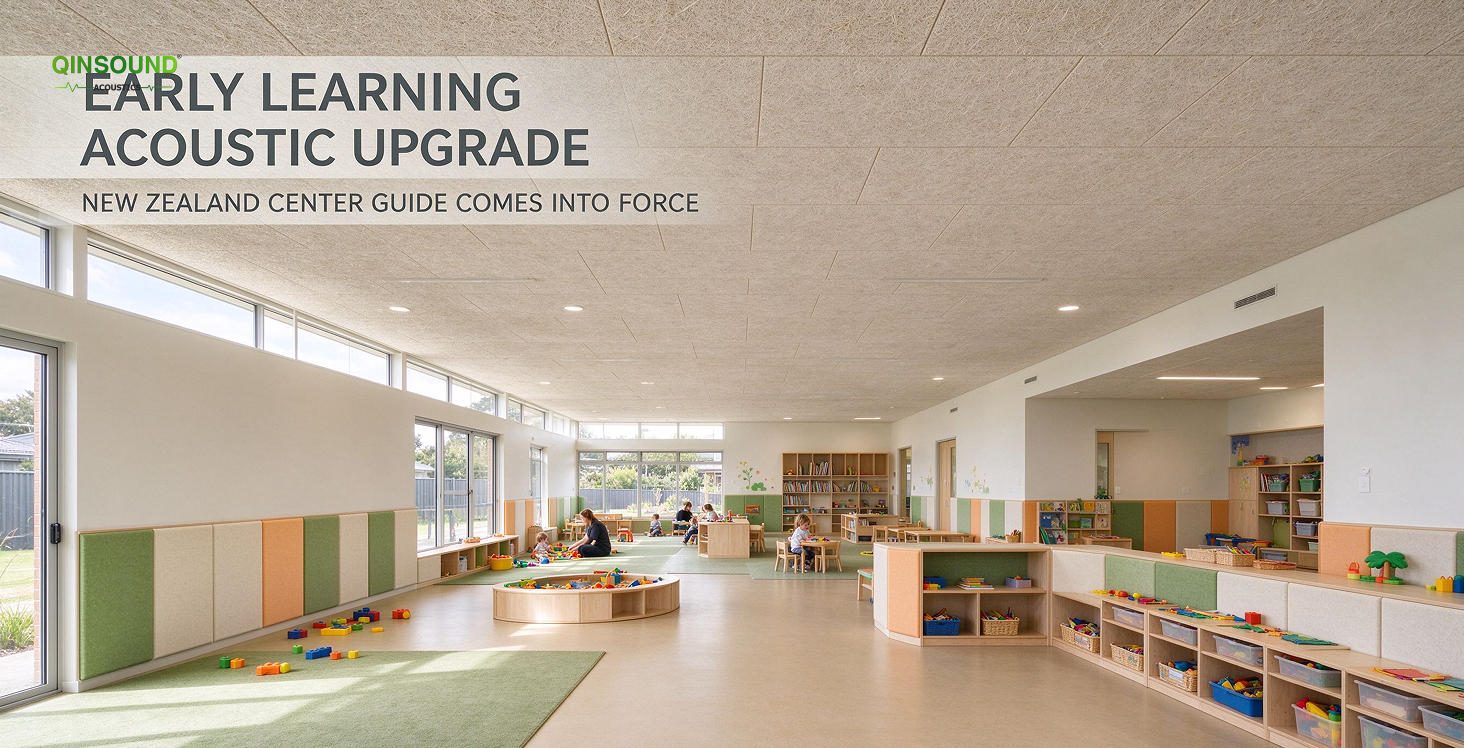
Updated New Zealand Ministry of Education acoustic guidelines for early childhood centres came fully into force in 2026, setting stricter reverberation time limits and noise level requirements for playrooms and activity spaces. The changes follow public health research linking high reverberation environments to increased behavioural challenges, speech development delays and vocal strain among early childhood educators.
For centre operators and builders, the updated code has raised the bar for acoustic material selection. All products must be non-toxic, formaldehyde-free and impact-resistant for high-contact child environments. Durability and cleanability are also critical, as early learning spaces see heavy daily wear and frequent spill cleaning. Aesthetically, warm, natural finishes are preferred to support calm, nurturing learning environments.
QinSound’s early childhood acoustic package is fully aligned with NZ educational acoustic standards. Cement-bonded wood wool acoustic panels are used for ceilings, delivering broadband absorption with a natural, warm finish that complements playroom design. Impact-resistant recycled polyester acoustic panels are installed at low wall heights to absorb reflected noise at child level and protect walls from scuffs and impact. All products are E0 formaldehyde-free with non-toxic binders and meet AS/NZS Class A fire safety requirements.
Early childhood construction specialists expect the code update to drive a 30%+ increase in acoustic upgrade projects across the country through 2027.