

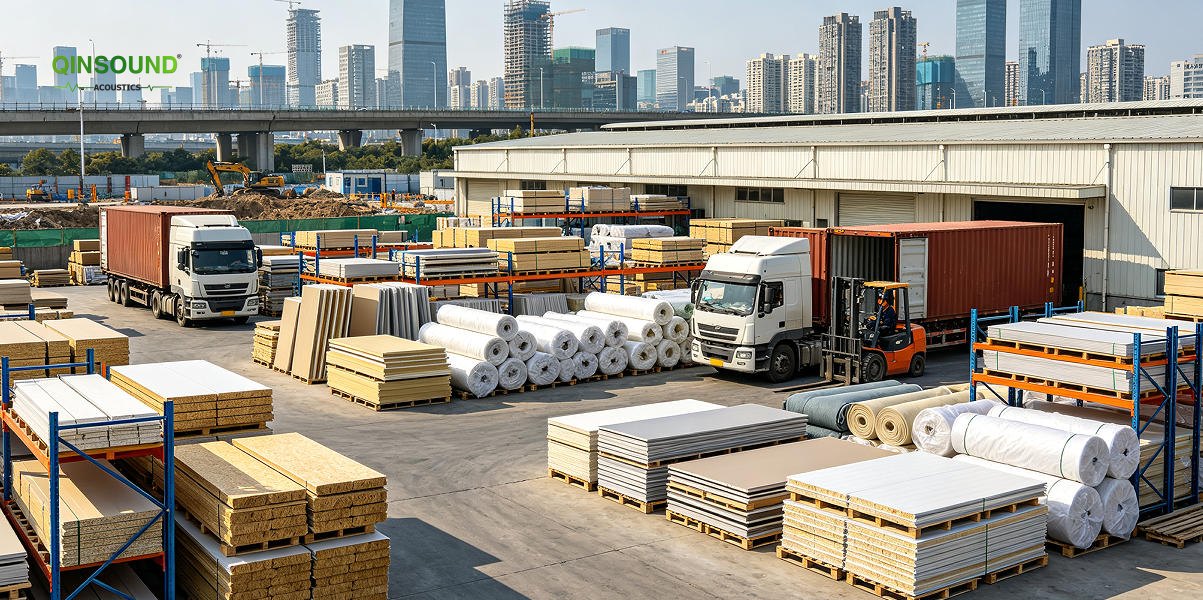
Different overseas regions present differentiated material selection trends: high-temperature and dusty scenarios in the Middle East prefer dust-proof and heat-resistant fiberglass ceilings and wood wool panels; humid regions in Southeast Asia favor moisture-proof and mildew-resistant PET polyester panels and clean fabric wrapped panels; high-end public projects in Europe and America prioritize low-carbon recyclable environmentally friendly acoustic materials. A diversified, scenario-based, customized product matrix has become the core competitiveness of domestic acoustic brands going global.
Industry data shows that the export volume of domestic acoustic panels increased by 26% year-on-year in the first half of the year. Acoustic suppliers with complete international certification systems, flexible OEM/ODM customization capabilities and stable large-scale supply capacity are gaining more recognition in the global engineering market.