

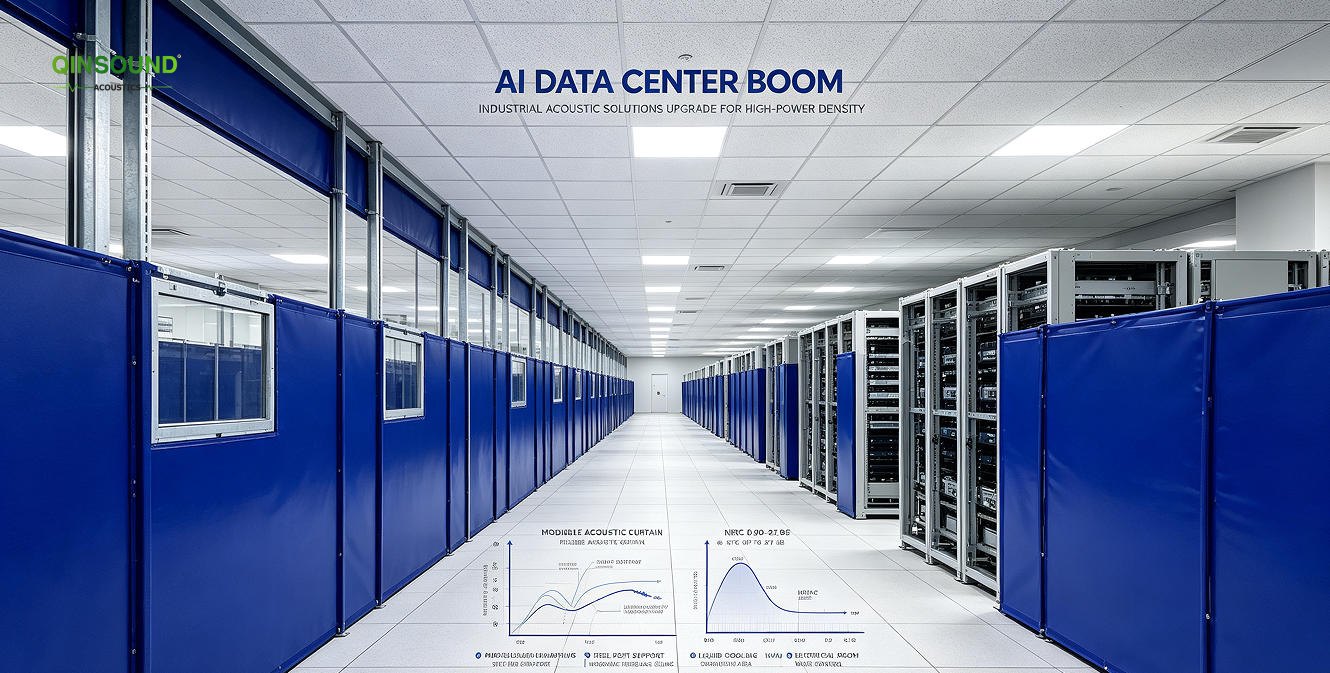
Driven by the rapid expansion of AI large model training and inference computing power, the construction of high-power density data centers around the world has maintained a rapid growth momentum. Different from traditional server rooms, the application of high-power liquid cooling systems and high-air-volume HVAC equipment has significantly increased the noise load of data centers, and the noise control requirements for operation and maintenance areas and adjacent office areas have been further improved. Acoustic design is moving from post-construction supplementation to pre-engineering standard configuration.
Industry data shows that the designated usage of industrial acoustic products in global data center projects increased by 35% year-on-year in the first half of 2026. The mainstream solution adopts a combined configuration of high-density inorganic fiberglass acoustic ceiling tiles and modular damping industrial sound barriers. Fiberglass acoustic ceiling tiles (NRC 0.90–0.95) are fully laid in the equipment hall, which efficiently absorbs the full-spectrum reflected noise of equipment and airflow, and has excellent sag resistance and dust resistance. Modular damping sound barriers are arranged around high-noise areas such as liquid cooling units and transformer rooms, with a single-layer STC rating of up to 27dB, which blocks the direct transmission of equipment noise to the operation and maintenance work area.
QinSound industrial-grade acoustic product line covers the full scene of equipment halls, operation and maintenance areas and office supporting areas, and provides standardized and customized acoustic solutions for data center projects of different power densities. Industry analysts believe that with the continuous improvement of server power density, acoustic performance will become one of the core indicators for evaluating the operational quality of data centers.