

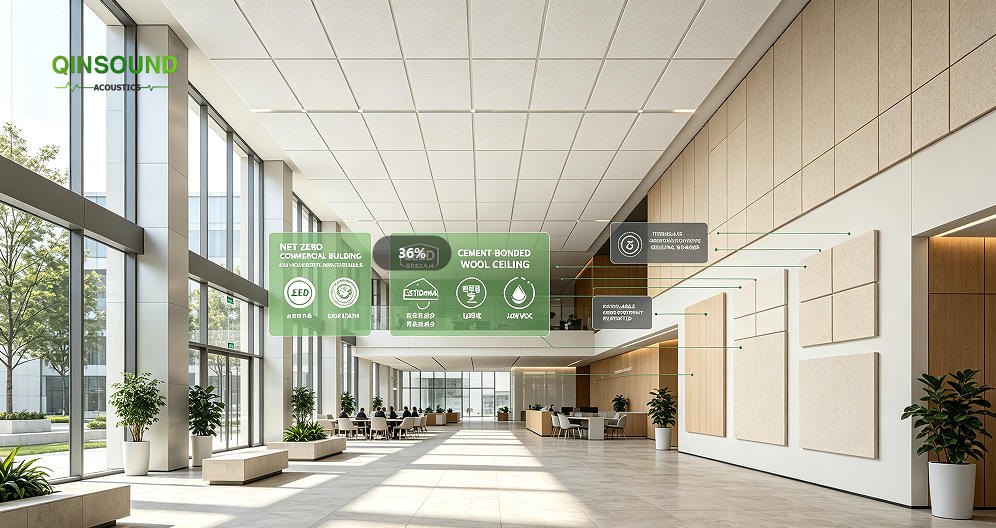
Against the backdrop of accelerating net-zero building regulations across North America, Europe and the Middle East, acoustic material selection in commercial construction is increasingly tied to whole-life carbon footprint metrics. Green building certification systems such as LEED, BREEAM and Estidama have raised the weighting of recycled content, embodied carbon and end-of-life recyclability for interior building materials, driving acoustic product suppliers to optimize production processes and material formulas.
Industry monitoring data shows that in the first half of the year, the specified usage volume of low-carbon acoustic product lines represented by 100% post-consumer recycled polyester fiber panels and cement-bonded wood wool panels increased by 29% year-on-year in new commercial construction projects. Recycled polyester acoustic panels deliver an NRC rating of 0.85–0.95 with E0 grade formaldehyde-free formulation, helping projects reduce indoor emission risks while contributing to material carbon reduction targets. Cement-bonded wood wool ceiling panels, with an NRC of 0.80–0.90, feature low embodied carbon in production and natural recyclable raw materials. All mainstream low-carbon acoustic lines carry ASTM E84 / EN 13501 Class A fire certification, fully complying with commercial and public building safety codes.
Industry analysts point out that as carbon compliance requirements extend to office, education, healthcare and hospitality sectors, acoustic material suppliers with complete carbon footprint verification documents, low-carbon production systems and full recyclable product portfolios will gain clearer competitive advantages. Policy-driven product upgrading is expected to continue driving structural growth in the sustainable acoustic materials segment over the next three to five years.