

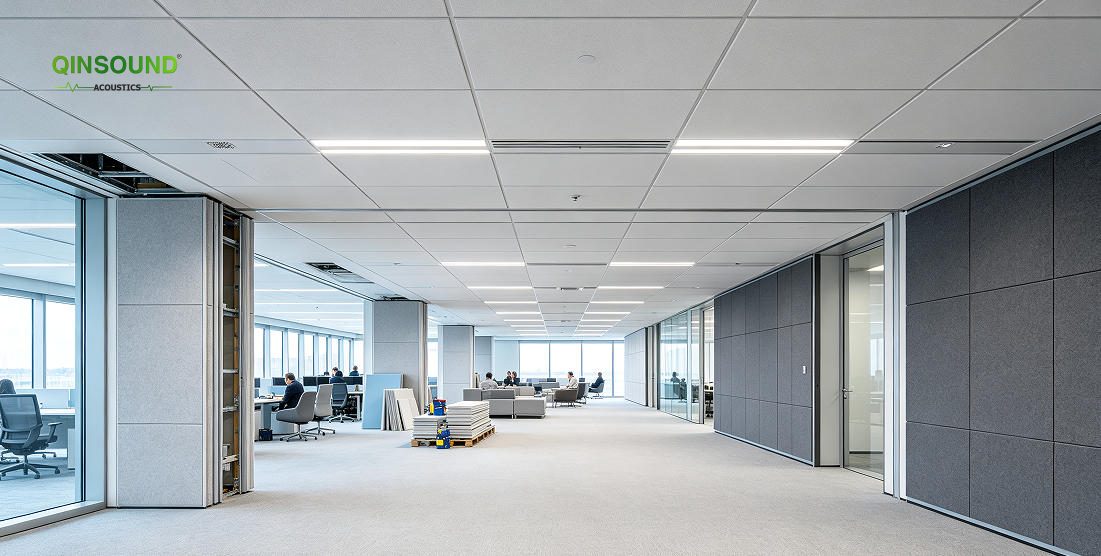
The North American commercial building retrofit market has maintained double-digit growth in 2026, driven by office space iteration, ESG compliance upgrades and building energy efficiency renovations. Industry research firm data shows that acoustic environment optimization has moved from optional value-added renovation to standard scope in Class A office, retail and public building retrofit projects, with an adoption rate exceeding 62%.
The growth is primarily driven by two factors. On one hand, hybrid work models have raised tenant requirements for office acoustic comfort, and sound environment performance has become a key indicator affecting leasing rates and rental premiums. On the other hand, updated local building codes in multiple U.S. states and Canadian provinces have put forward clearer mandatory requirements for reverberation and sound insulation in public gathering spaces, forcing property owners to complete acoustic upgrades during renovation cycles.
Market statistics indicate that fiberglass acoustic ceilings and recycled polyester wall panels are the highest-volume product categories in commercial retrofit projects. Industry insiders predict that as the stock of aging commercial buildings continues to enter the renovation cycle, the acoustic building materials retrofit segment will maintain a steady annual growth rate of around 9%, becoming a core growth driver for the industry.