

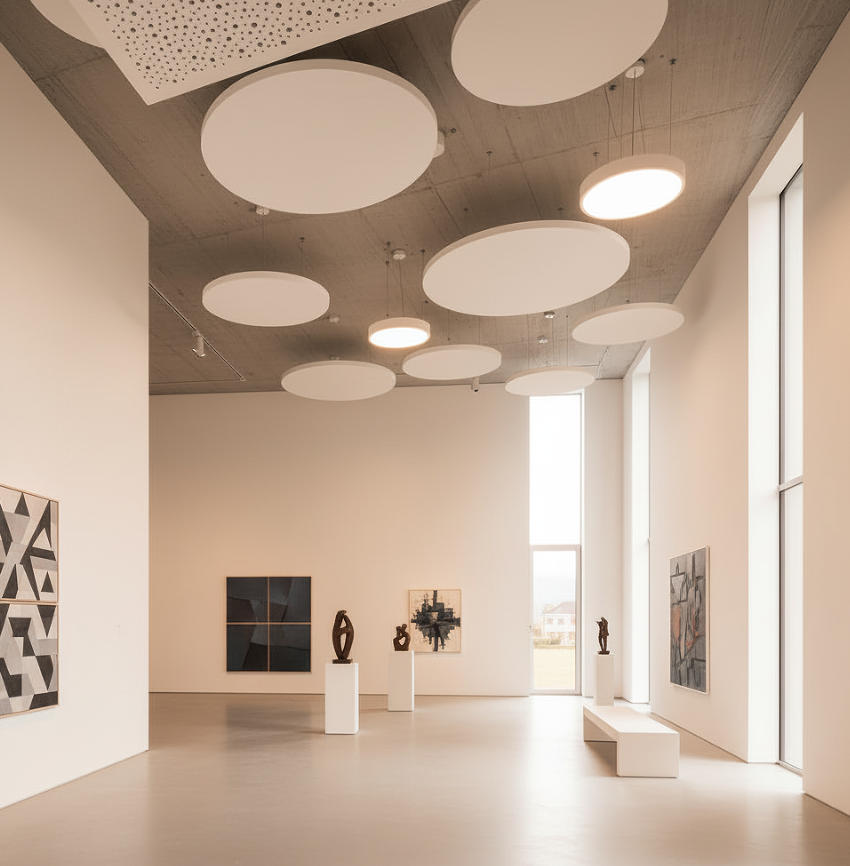
In commercial interior design, acoustic ceiling panels have evolved from basic noise control components to critical elements of occupant comfort and building performance. Unlike standard ceiling materials, high‑grade acoustic panels are precisely engineered to absorb specific sound frequencies, reduce reverberation, and enhance speech clarity—all while meeting strict fire, moisture, and sustainability standards.
The performance of acoustic ceiling panels is quantified by two primary metrics: Noise Reduction Coefficient (NRC) and Sound Absorption Class. Per ASTM C423, NRC is the average absorption coefficient across four mid‑frequency bands (250–2000 Hz), rounded to the nearest 0.05. Premium panels achieve NRC 0.90–0.95 (Class A), absorbing over 90% of mid‑frequency sound—ideal for open offices, classrooms, and conference rooms where speech intelligibility is critical. For reference, standard gypsum board has an NRC of just 0.05, reflecting nearly all sound and creating harsh echo environments.
A key advantage of acoustic ceiling panels is their broadband absorption capability. High‑quality products effectively reduce sound energy across 125 Hz to 4000 Hz, addressing both low‑frequency hum (HVAC, machinery) and high‑frequency chatter. This is achieved through a porous internal structure—typically high‑density fiberglass or mineral wool—where sound waves penetrate and dissipate energy via friction.
Fire safety is non‑negotiable in commercial buildings, and acoustic ceiling panels meet the highest global standards. Most premium lines carry Class A (ASTM E84) or Class 1 fire ratings, with flame spread indices ≤25 and smoke developed indices ≤450. In Europe, compliance with EN 13501‑1: A2‑s1,d0 (non‑combustible, low smoke) is common for public spaces. These ratings ensure panels resist ignition, limit flame spread, and produce minimal smoke—critical for safe egress during emergencies.
Moisture resistance is another essential feature, especially in humid climates or high‑moisture areas like kitchens and pools. Quality acoustic panels maintain structural stability and acoustic performance at 95% relative humidity (RH) without sagging or warping. This is verified through ASTM C1107 testing, ensuring long‑term durability in challenging environments.
Sustainability is increasingly important, and modern acoustic ceiling panels support green building certifications like LEED and WELL. Many products use 60–74% recycled content (post‑consumer fiberglass or mineral wool) and are fully recyclable at end‑of‑life. VOC emissions are ultra‑low (<0.002 mg/m²/hr per ASTM D5116), improving indoor air quality and reducing health risks.
Installation is efficient and cost‑effective. Standard panels (600×600 mm, 1200×600 mm) fit universal suspended grid systems, with lightweight construction (3–5 kg/m²) reducing structural load and installation time. Demountable designs allow easy access to plenum spaces for maintenance, minimizing disruption to occupants.
In conclusion, acoustic ceiling panels are precision‑engineered solutions that deliver verified acoustic performance, fire safety, moisture resistance, and sustainability. For commercial projects prioritizing occupant comfort and compliance, selecting panels with NRC ≥0.90, Class A fire rating, and 95% RH resistance ensures optimal long‑term results.