

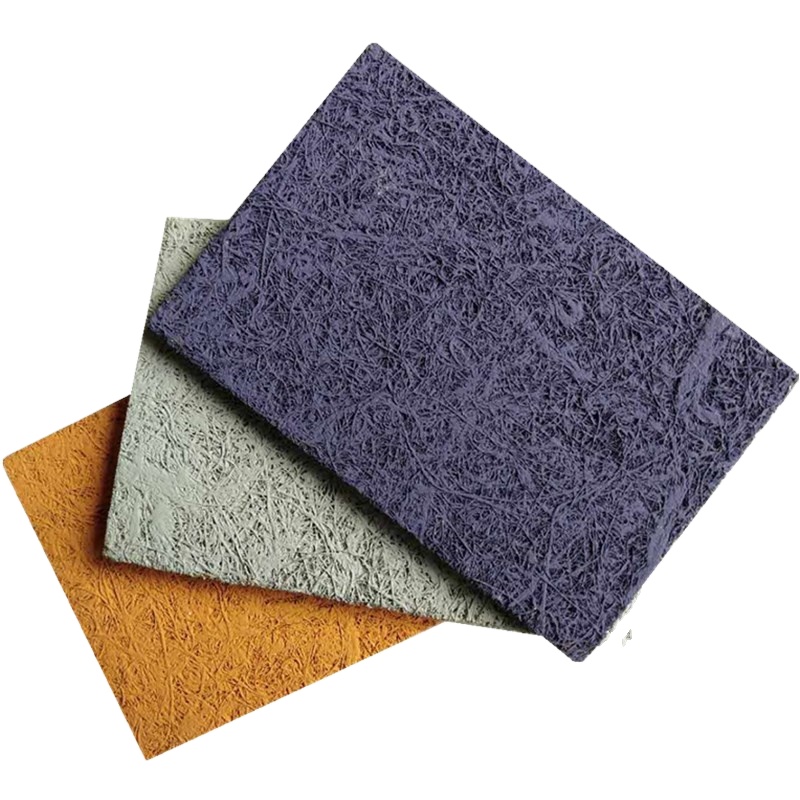
In 2026, high-end commercial interior design has shifted from flat minimalism to natural textured aesthetics, and "decorative + functional" integrated acoustic materials have become a new growth highlight in the industry. According to a survey of design institutions, wood wool acoustic panels have become the preferred ceiling and wall material for boutique catering, concept retail and lobby spaces, with market demand rising by 38% year-on-year.
Different from traditional flat acoustic boards, cement-bonded wood wool panels are made of natural spruce fiber and eco-friendly cement, with a unique rough matte texture that adds warm, natural layering to the space without additional paint or decoration. In terms of acoustic performance, the open fiber structure achieves an NRC of 0.80–0.90, which effectively reduces mid-high frequency reverberation caused by crowd activities and creates a quiet and comfortable commercial atmosphere.
In addition, wood wool panels have Class A fire resistance and 95% RH moisture resistance, which can maintain stable performance in high-humidity and high-frequency commercial operation scenarios. Industry observers believe that as commercial space pays more attention to differentiated experience, textured natural acoustic materials will occupy a larger market share, and wood wool panels will continue to lead the decorative acoustics track.