

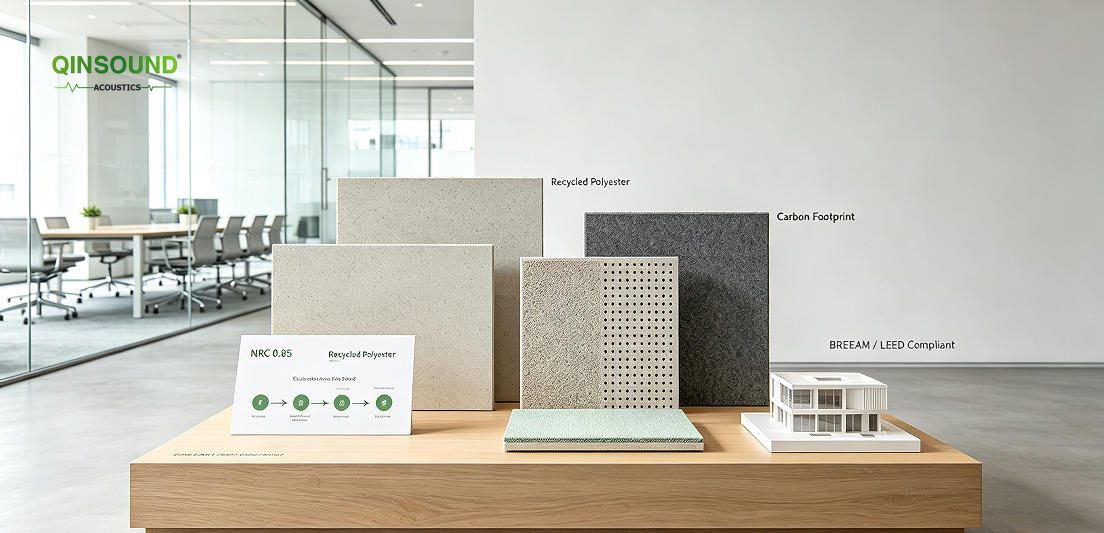
With the comprehensive implementation of global ESG requirements and green building standards, the evaluation of building materials is no longer limited to performance and safety, but extends to the full lifecycle carbon emission level. In high-end commercial and public construction projects, complete carbon footprint accounting and lifecycle assessment reports have become necessary access conditions for acoustic material suppliers.
Recycled acoustic materials represented by recycled polyester fiber panels have natural low-carbon advantages. The use of post-consumer recycled raw materials greatly reduces the carbon emissions in the production link. The products are recyclable at the end of their service life, which can effectively reduce the carbon level of the whole lifecycle of buildings. Such materials can usually contribute multiple credits in green building certification systems such as LEED and BREEAM, and help project parties achieve carbon emission targets.
Industry observers pointed out that carbon capability will become the core competitiveness of acoustic building material enterprises in the next stage. Suppliers with complete product carbon footprint data, low-carbon production systems and recyclable product systems will gain more initiative in the competition for high-end projects, and the industry will further develop in the direction of low-carbon and sustainable development.