

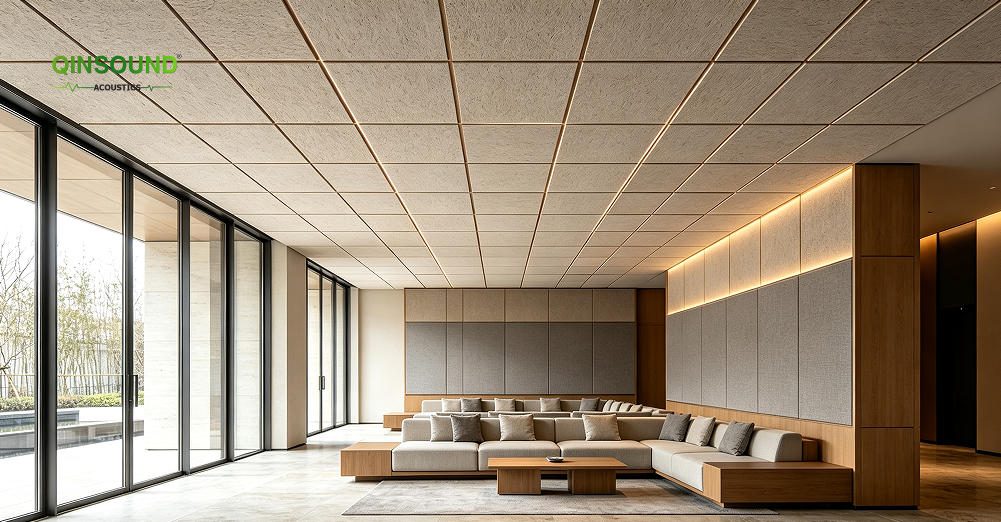
As competition in the premium hospitality sector intensifies, high-end hotels and boutique resorts are shifting their competitive focus from room hardware to full-space sensory experience, and acoustic environment quality is rapidly becoming a core indicator of guest satisfaction ratings. More and more luxury hospitality projects are integrating professional acoustic planning into the initial interior design stage, rather than carrying out temporary remedial treatment after guest complaints arise.
Industry research shows that hard decorative materials commonly used in hotel lobbies, restaurants and lounge areas, such as stone flooring, large glass facades and bare high ceilings, usually lead to reverberation time exceeding the comfort threshold. At present, cement-bonded wood wool acoustic ceilings have become the mainstream choice for public area renovation, with a stable NRC of 0.80–0.90, which can effectively reduce the overall ambient noise while retaining the natural texture of the space. Guest rooms and private suites mostly use fabric-wrapped acoustic panels, with an NRC of 0.85–0.95, which can be custom color-matched according to the interior design scheme. All mainstream solutions meet Class A fire protection and moisture-proof standards, and fully adapt to the long-term operation needs of high-end hospitality places.
Market monitoring data shows that the number of acoustic renovation projects for high-end hotels and resorts increased by 32% year-on-year in the first half of the year. Industry observers believe that as guest experience evaluation standards continue to improve, acoustic design will gradually move from a value-added option to a standard configuration for premium hospitality space construction, bringing long-term growth momentum for scenario-customized acoustic solutions.