

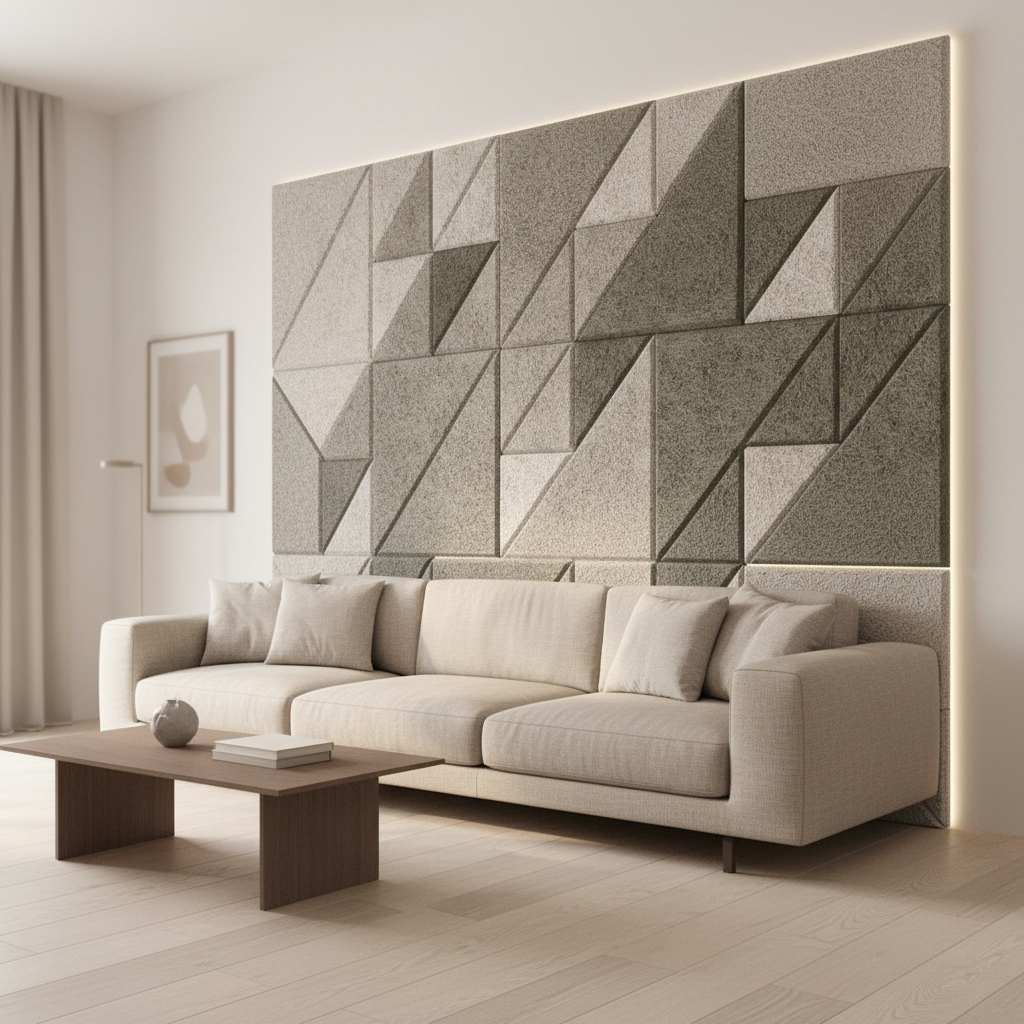
Acoustic materials are the core carriers of noise control and sound quality optimization. Among them, sound insulation materials and sound absorption materials, with their different functional characteristics, are widely used in various scenarios. Their selection, installation and use directly determine the effect of acoustic optimization, and they need to be scientifically applied in combination with material characteristics and scene needs to achieve the best performance.
Sound insulation materials take blocking sound wave transmission as their core function. Most of them adopt high-density, high-stiffness and well-sealed materials. By increasing the resistance of sound wave transmission, they reduce the transmission of sound waves between different spaces, thus achieving the purpose of noise reduction. Common sound insulation materials include double-layer laminated glass, high-density sound insulation panels, damping sound insulation felt, sound insulation cotton, etc. Different materials have different application scenarios: double-layer laminated glass is mainly used for doors and windows, which can effectively block air-borne sound, and is suitable for scenes with high requirements for air-borne sound insulation such as buildings facing the street and meeting rooms; high-density sound insulation panels and damping sound insulation felt are mostly used for wall and ceiling renovation, which can effectively weaken solid-borne sound and alleviate noise troubles such as equipment vibration and footsteps; sound insulation cotton is mostly used for gap filling, assisting in improving sound insulation effect and filling sound transmission gaps at the joints of doors, windows, pipelines and walls.
Sound absorption materials take absorbing sound wave energy as their core function. Most of them are porous and loose materials. By capturing sound waves and converting them into weak heat energy, they reduce indoor sound wave reflection, alleviate problems such as excessive echo and reverberation, and optimize indoor sound quality. Common sound absorption materials include polyester fiber sound absorption panels, glass wool, rock wool, perforated sound absorption panels, etc. Polyester fiber sound absorption panels are high in appearance and environmental protection, suitable for exposed laying on walls and ceilings, and applicable to scenes such as offices and audio-visual rooms; glass wool and rock wool have outstanding cost performance, mostly used for concealed filling inside walls and ceilings, suitable for large-area acoustic optimization; perforated sound absorption panels have both decorativeness and sound absorption, and can be used with resonant cavities to specifically solve the problem of sound wave reflection at specific frequencies, suitable for professional scenes such as concert halls and recording studios.
The application of acoustic materials must follow the core principles: first, select materials on demand, choose suitable sound insulation or sound absorption materials according to noise types (air-borne sound, solid-borne sound) and scene needs, and avoid blind matching; second, pay attention to installation details, sound insulation materials must ensure installation tightness to prevent sound insulation effect attenuation caused by gaps, and sound absorption materials must be laid evenly to ensure balanced indoor sound quality; third, take environmental protection into account, prioritize materials that meet national environmental protection standards, and avoid the release of harmful substances affecting use safety; fourth, reasonable matching, most scenes need to combine sound insulation and sound absorption materials to not only block external noise from entering, but also optimize indoor sound quality, achieving double acoustic protection.
Scientific application of acoustic sound insulation and absorption materials can accurately solve various acoustic problems, create a quiet, comfortable and high-quality acoustic environment for different scenarios, and meet people's high-quality needs for acoustic experience.