

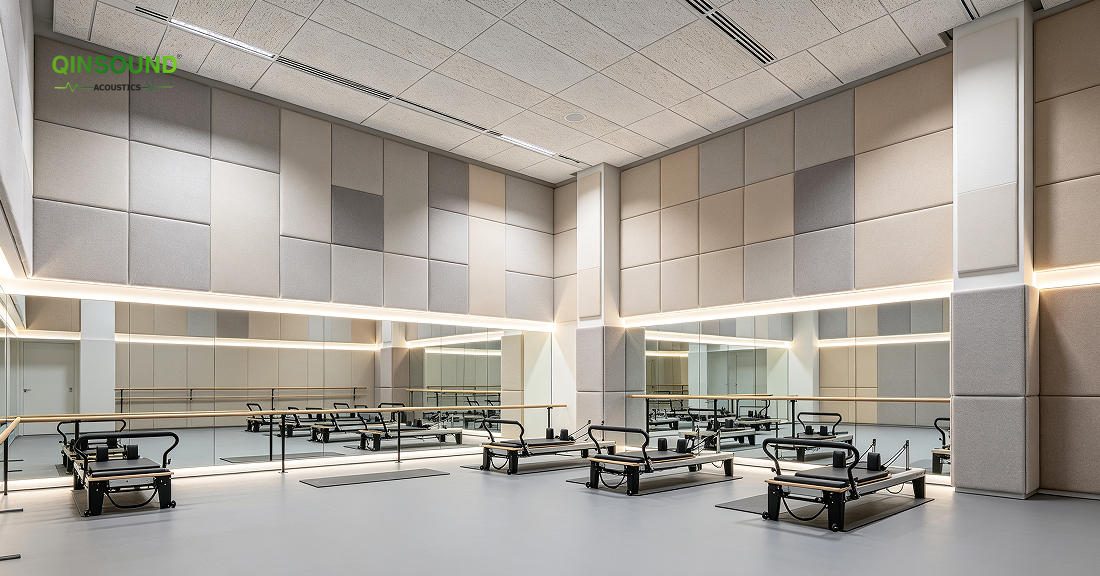
The boutique fitness and leisure sector across North America and Europe has maintained robust expansion in 2026, with specialized formats such as Pilates studios, barre facilities, functional training gyms and wellness centers opening at a record pace. As market competition intensifies, venue operators are shifting their focus from equipment specifications to overall spatial experience, and acoustic environment quality has emerged as a key differentiator for premium fitness brands.
Traditional fitness venues commonly feature high ceilings, mirrored walls and hard rubber flooring, which create severe reverberation. Overlapping background music, instructor cues and equipment noise result in muddy sound quality, reducing class immersion, increasing auditory fatigue for both instructors and members, and in some cases compromising movement safety due to unclear verbal cues. In response, professional acoustic systems are becoming a standard specification for new and renovated high-end fitness facilities. Fabric-wrapped acoustic panels are widely applied to training room walls to eliminate flutter echo and improve voice clarity, while wood wool or fiberglass acoustic ceilings control overall reverberation in high-ceiling spaces. Impact-resistant polyester panels are used in high-intensity training zones to withstand wear and tear, with all materials meeting Class A fire safety codes for commercial assembly spaces.
Industry monitoring data shows that procurement of acoustic materials for fitness and leisure venues in North America and Europe grew by 33% year-on-year in the first half of 2026. Leading chain boutique fitness brands have already incorporated acoustic design standards into their new store construction guidelines. As the wellness building concept continues to deepen, acoustic performance, as a core factor affecting exercise comfort and safety, will continue to drive demand growth in the fitness and leisure segment, favoring suppliers with mature scenario-specific solution capabilities.