

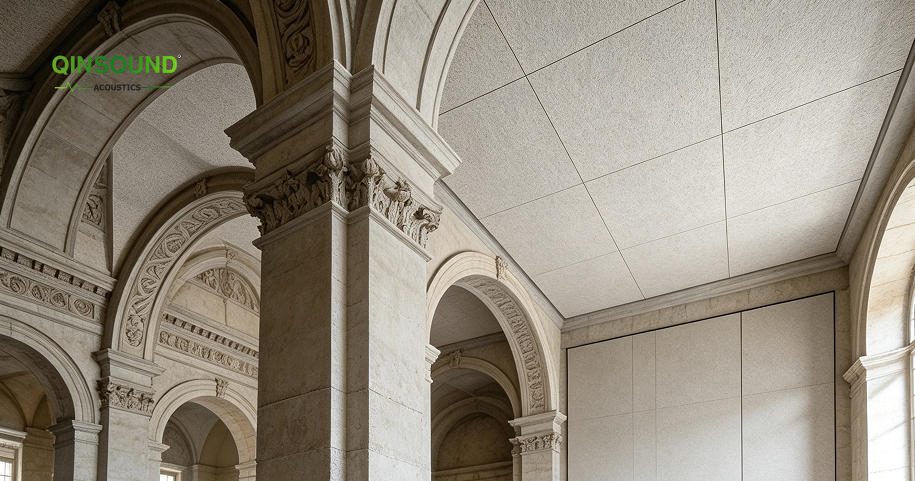
Driven by EU cultural heritage funding and building energy efficiency upgrade policies, the renovation market for listed and historic buildings across Europe has maintained rapid growth. Acoustic upgrading has emerged as one of the most technically challenging segments, as solutions must strictly preserve the original architectural appearance and interior features while meeting modern acoustic comfort and sound insulation standards.
Market feedback shows that thin-profile, visually compatible acoustic systems are becoming the mainstream choice for heritage building retrofits. Cement-bonded wood wool panels with natural textured finishes are widely used in ceiling renovations of historic halls and lobbies, matching the original material texture while delivering NRC 0.80–0.90 sound absorption performance. Ultra-thin recycled polyester panels support adhesive non-destructive installation, making them suitable for wall retrofits in protected interiors where drilling and structural modification are prohibited. Both product lines comply with European historic building conservation guidelines while delivering modern acoustic performance.
Heritage renovation industry data indicates that acoustic-related renovation spending in European listed buildings grew by 32% year-on-year in the first half of 2026. As energy efficiency and comfort upgrades continue to penetrate the historic building stock, demand for high-compatibility, non-invasive acoustic solutions will continue to rise, creating a dedicated high-margin niche for professional acoustic material suppliers.