

Against the background of global carbon neutrality goals, the construction industry is accelerating its transformation to low-carbon and environmental protection in 2026, and the proportion of green building materials in engineering procurement has increased significantly. Relevant policy documents in Europe, North America and Southeast Asia have successively raised the carbon emission assessment standards for public building materials, and acoustic materials with natural raw materials and low-carbon production have become a new growth highlight in the industry.
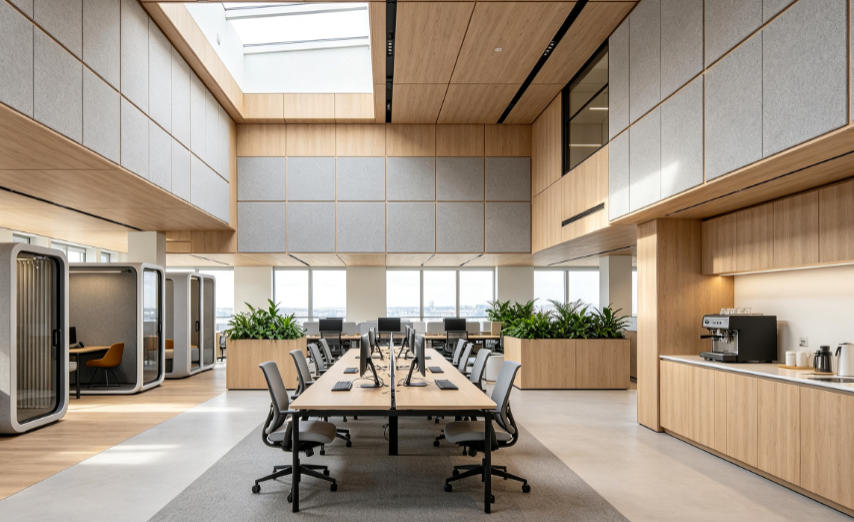
As a typical representative of natural sustainable acoustic materials, cement-bonded wood wool acoustic panels have attracted more and more attention from design institutions and owners. The panels are made of natural spruce fiber and eco-friendly cement as the main raw materials, with low carbon emission in the production process, and the products can be recycled after reaching the service life, which fully meets the evaluation requirements of green building certification systems such as LEED and BREEAM. The open fiber structure achieves an NRC of 0.80–0.90, with stable acoustic performance, and the unique natural texture also takes into account decorative functions, realizing the integration of material function and environmental protection value.
In addition, wood wool panels have Class A fire resistance and excellent moisture resistance, and can maintain stable performance in various complex commercial scenarios. Industry data shows that in the first half of 2026, the application volume of wood wool acoustic panels in public construction projects increased by 34% year-on-year. With the continuous tightening of low-carbon building policies around the world, natural sustainable acoustic materials will occupy a larger market share in the future.