

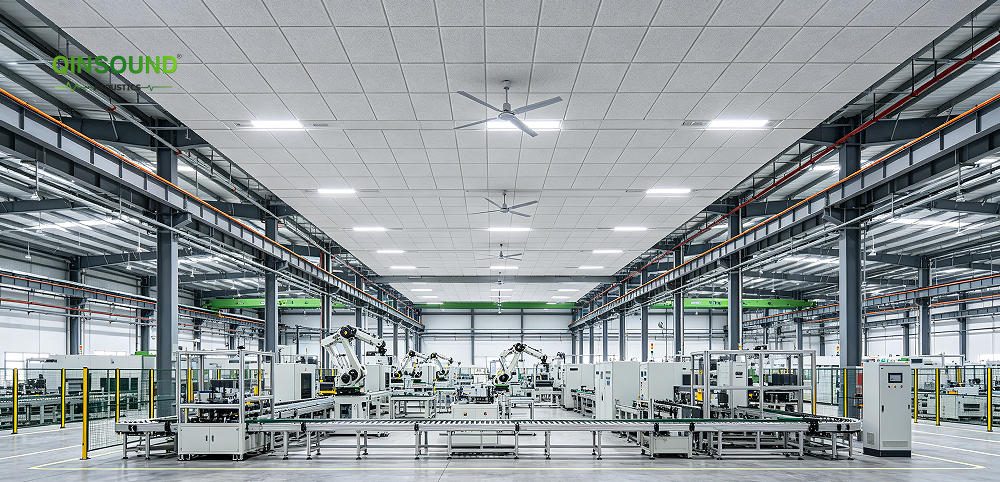
Driven by the global energy transition, new energy sectors such as power batteries, photovoltaic modules and energy storage equipment continue to expand production capacity, and large-scale manufacturing plants have put forward higher requirements for occupational health and acoustic environment. Long-term exposure to mechanical equipment noise will not only damage the hearing of workers, but also interfere with on-site communication and increase operational safety risks.
High-density inorganic fiberglass acoustic ceiling tiles have become the core acoustic solution for new energy factory construction and renovation projects. The material has inherent Class A fire resistance, zero flame spread and low smoke toxicity, fully complying with the strict fire protection codes for industrial plants. With an NRC rating of 0.90–0.95, the interconnected porous structure effectively absorbs the mixed noise generated by production equipment, ventilation systems and on-site personnel. The panels also have excellent sag resistance, corrosion resistance and moisture stability, and can maintain stable performance under high temperature, high humidity and dusty industrial working conditions for a long time.
Relevant data shows that in the newly built industrial plants of new energy in 2026, the proportion of acoustic ceiling design included in the initial stage of the project has increased to 57%. As occupational health and safety regulations continue to tighten around the world, industrial-grade acoustic building materials will maintain steady growth in the manufacturing construction market.