

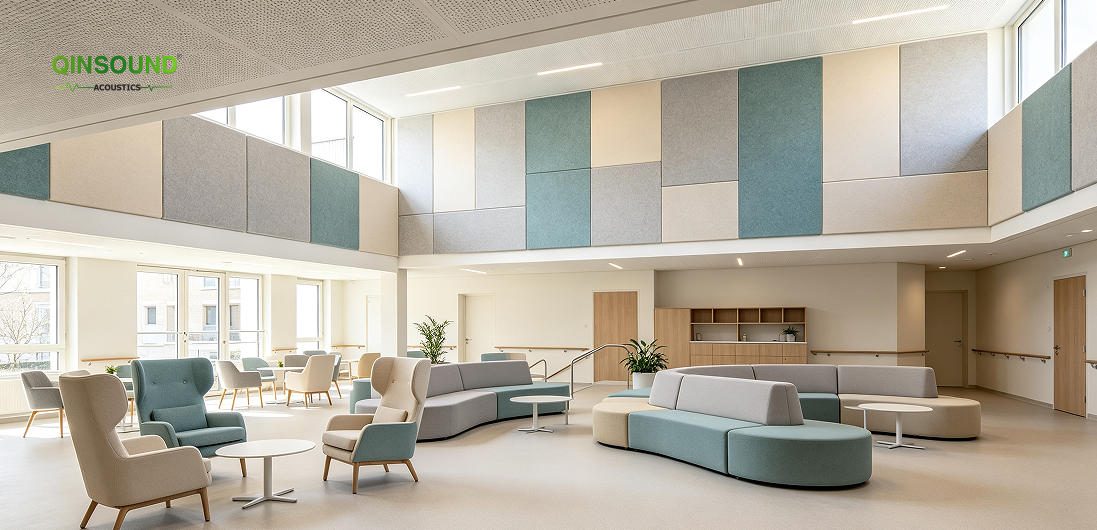
The global senior care industry continues to upgrade facility construction standards in 2026, and acoustic environment quality has evolved from a comfort indicator to a core dimension affecting resident health and recovery. Multiple medical research institutions have confirmed that long-term exposure to noisy environments increases sleep disturbance, blood pressure fluctuation and cognitive fatigue among elderly residents, and also raises the work pressure of nursing staff.
Against this backdrop, professional acoustic systems are being widely deployed in nursing homes, assisted living communities and senior daycare centers. Recycled polyester and fabric-wrapped acoustic panels have become the mainstream choice for senior living renovation projects, delivering NRC 0.85–0.95 full-frequency sound absorption to reduce corridor traffic noise, public area reverberation and inter-room sound transmission. The materials feature zero formaldehyde and ultra-low VOC emissions, and soft matte finishes create a warm, calm atmosphere that reduces anxiety among residents. All products meet strict Class A fire safety codes for public care facilities.
Industry monitoring data shows that acoustic renovation projects in the senior care sector grew by 28% year-on-year in the first half of 2026. As the concept of healing environments extends to the elderly care field, high-quality acoustic design will become a standard configuration for medium and high-end senior living facilities, and an important indicator to measure service quality and operational level.