

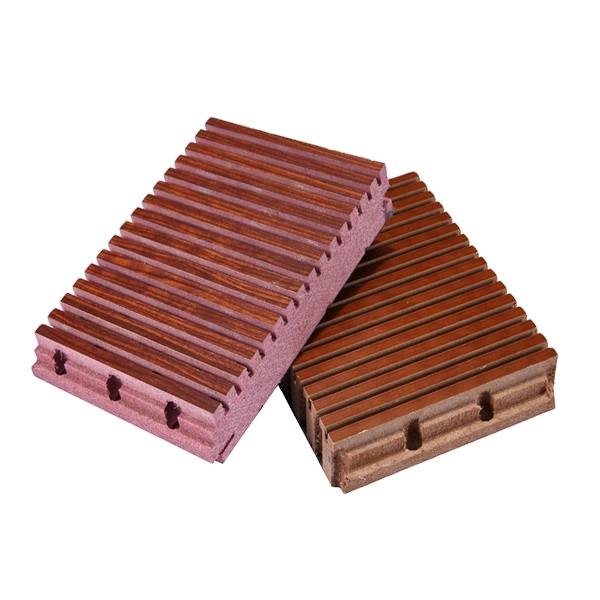
In 2026, countries around the world have successively updated the acoustic acceptance specifications for educational and cultural public buildings, and mid-low frequency reverberation control has been officially included in the mandatory assessment indicators. Traditional porous acoustic materials have limited treatment effect on low-frequency noise of 250Hz–1000Hz, which can no longer meet the engineering acceptance requirements, making resonant grooved and perforated acoustic panels the core solution for large-space acoustic renovation.
Based on the Helmholtz resonance principle, grooved and perforated wooden panels are designed with precise groove and hole structures to target stubborn low-frequency vibration and indoor standing waves. With the rear air cavity and mineral wool backing material, the panels achieve full-frequency balanced sound absorption, with the overall NRC up to 0.90. The wood veneer finish is neat and elegant, which fits the simple and solemn style of public architecture, and the standardized production is convenient for large-area construction of engineering projects.
At present, a large number of school auditorium, conference center and cultural hall renovation projects have listed resonant acoustic panels as designated wall acoustic materials. Industry engineers said that for large public spaces with complex acoustic environments, the "resonant wall panel + porous ceiling" combined scheme is the most scientific and effective acoustic treatment mode, and will become the mainstream configuration for public building acoustic projects.