

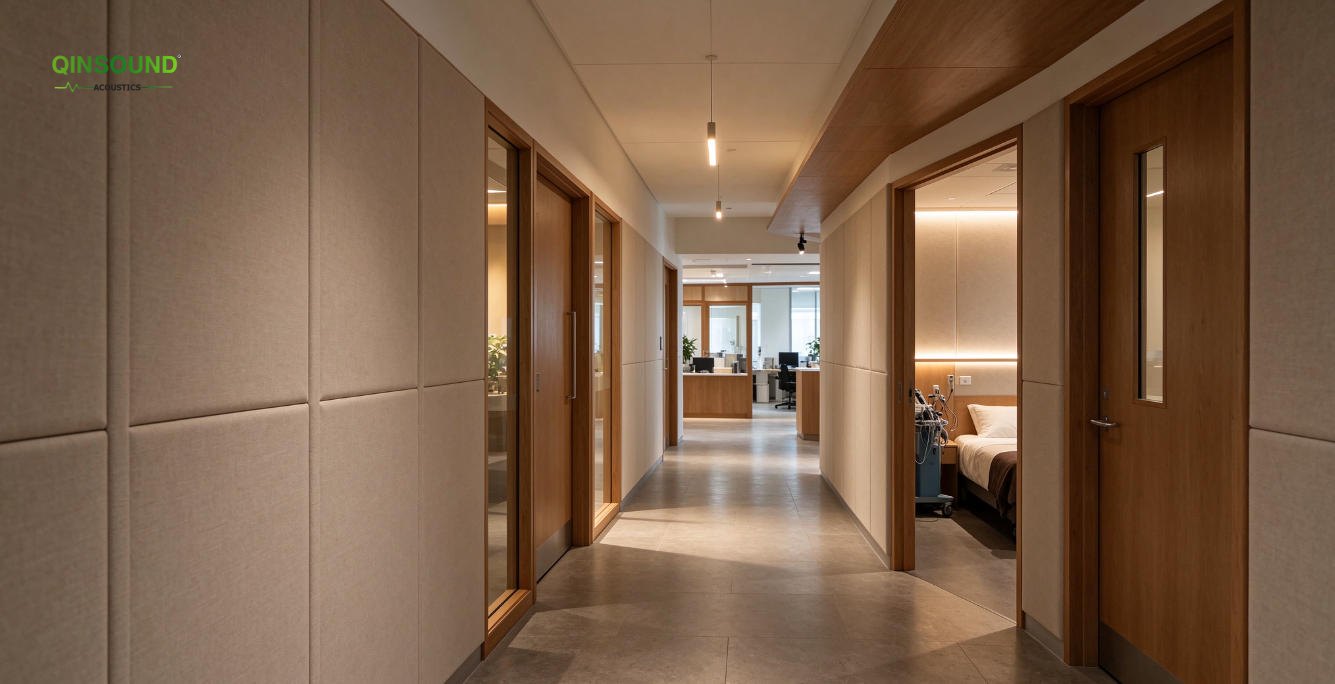
Project Background
This specialist sleep medicine diagnostic centre in Melbourne has 12 individual sleep study rooms, a patient waiting area and supporting medical offices. The centre performs overnight polysomnography testing, which requires extremely quiet room environments to ensure accurate test results. Original lightweight partition walls caused obvious sound leakage between rooms, and external traffic noise also penetrated testing suites, risking test data validity.
Key Acoustic Challenges
- Background noise in test rooms had to be kept extremely low to avoid disrupting patient sleep and invalidating diagnostic results
- High sound isolation between adjacent study rooms was required to prevent cross-interference between patients
- All acoustic materials had to support clinical disinfection and meet Australian healthcare fire and indoor air quality standards
Solution Delivered
Partition walls between sleep study rooms incorporated sound barrier layers within the wall cavity to deliver high-grade airborne sound isolation between adjacent testing suites. Room interiors were lined with fabric wrapped acoustic panels using medical-grade wipeable flame-retardant fabric to control internal reverberation and minimise ambient noise. All materials meet AS/NZS Class A fire safety and healthcare low-VOC standards.
Measurable Outcomes
- Inter-room airborne sound isolation reached STC 51, exceeding Australian medical diagnostic facility privacy requirements
- Test room background noise stabilised below NC 25, meeting professional sleep testing acoustic standards
- Patient test result validity rate increased, and retest rates decreased significantly
- All acoustic finishes withstood routine clinical disinfection with no performance loss