

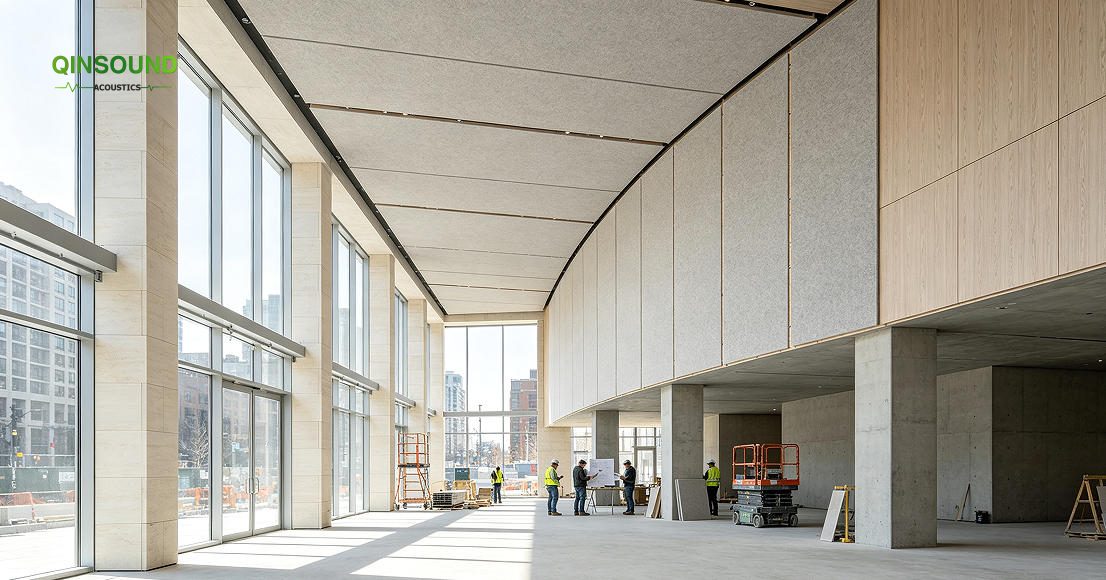
A growing number of U.S. states and Canadian provinces have rolled out mandatory net-zero energy building codes for new commercial and public construction, requiring all projects to achieve operational carbon neutrality by 2030 and meet strict embodied carbon limits for building materials. For the acoustic materials sector, this regulatory shift has elevated carbon footprint and full-lifecycle sustainability from secondary selling points to core entry criteria for project bidding.
Industry tracking data shows that low-carbon acoustic product lines, represented by 100% post-consumer recycled polyester fiber panels and low-embodied-carbon cement wood wool panels, have seen a 29% year-on-year increase in specification volume across North American new construction projects in the first half of 2026. These products deliver stable NRC 0.80–0.95 sound absorption performance while significantly reducing carbon emissions across production, transportation and end-of-life recycling stages, effectively helping projects meet embodied carbon accounting requirements and earn green building certification credits.
Construction industry analysts note that as net-zero mandates expand to more regions, acoustic material suppliers with verified carbon footprint data, low-carbon production systems and recyclable product portfolios will gain a clearer competitive edge. The policy-driven product upgrade is expected to continue driving structural growth in the sustainable acoustic materials segment over the next three to five years.