

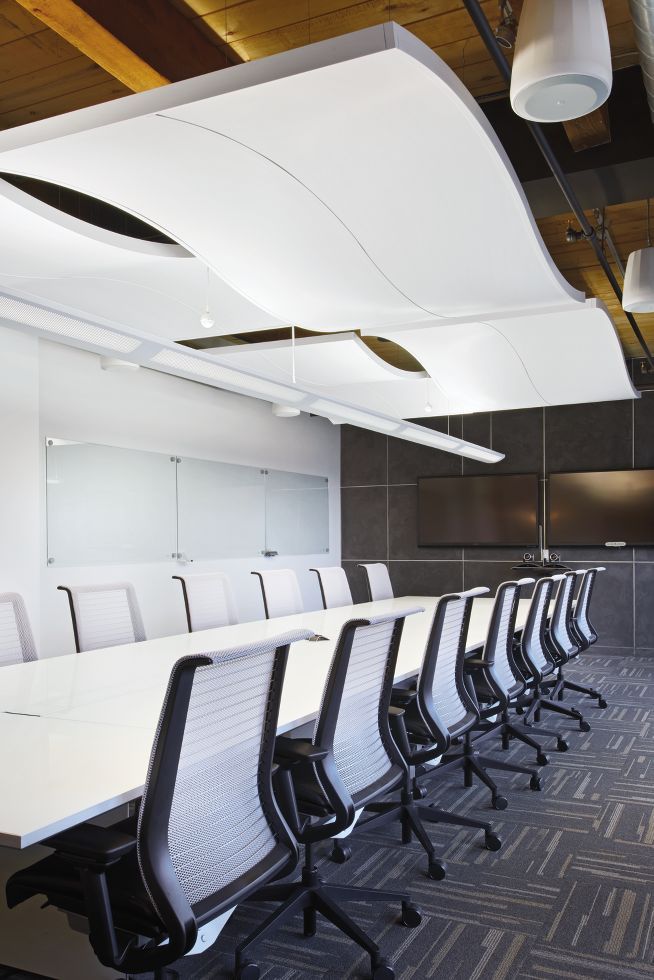
Fiberglass ceilings have become the gold standard for high‑performance acoustic control in modern commercial buildings, prized for their exceptional sound absorption, inherent fire resistance, lightweight construction, and sustainability. Composed of high‑density, ultra‑fine glass fibers bonded into rigid panels, fiberglass ceilings deliver verified acoustic performance that outperforms most mineral wool or gypsum‑based alternatives.
The defining advantage of fiberglass ceilings is their industry‑leading Noise Reduction Coefficient (NRC). Per ASTM C423 testing, premium fiberglass panels achieve NRC 0.90–0.95 (Class A), absorbing 90–95% of incident mid‑frequency sound energy (250–2000 Hz). This is significantly higher than standard acoustic tiles (NRC 0.70–0.80) and gypsum board (NRC 0.05), making fiberglass ceilings ideal for noise‑intensive spaces like open offices, classrooms, auditoriums, and call centers. The porous, interconnected internal structure of fiberglass allows sound waves to penetrate deeply, where energy is dissipated through friction between fibers—even at low frequencies (125 Hz) where many porous materials underperform.
Fire safety is a critical benefit, as fiberglass is inherently non‑combustible. Premium fiberglass ceilings meet Class A (ASTM E84) and EN 13501‑1: A1 (non‑combustible) fire ratings, with a Flame Spread Index of 0–5 and Smoke Developed Index <100—far stricter than most wood or fabric‑based acoustic materials. This makes fiberglass ceilings suitable for high‑risk public spaces like hospitals, schools, and transportation hubs, where fire safety codes are most stringent.
Lightweight construction (2.5–4 kg/m²) simplifies installation and reduces structural load, a key advantage for renovation projects or buildings with weight restrictions. Fiberglass panels are compatible with standard 15/16‑inch suspended grid systems, allowing quick, tool‑light installation by contractors. Demountable designs enable easy access to plenum spaces for HVAC or electrical maintenance without full panel removal.
Moisture resistance is another standout feature. Fiberglass ceilings maintain structural stability and acoustic performance at 95% relative humidity (RH) without sagging, warping, or mold growth. This is verified through ASTM C1107 testing, making fiberglass ceilings suitable for humid environments like coastal buildings, swimming pools, and kitchens.
Sustainability aligns with global green building goals. Many fiberglass ceilings use 60–74% recycled glass content (post‑consumer bottles and industrial waste) and are fully recyclable at end‑of‑life. VOC emissions are negligible (<0.002 mg/m²/hr per ASTM D5116), improving indoor air quality and supporting LEED and WELL certifications.
Design flexibility is enhanced by a wide range of finishes—including smooth, textured, and fabric‑wrapped options—that match modern interior aesthetics. Standard sizes (600×600 mm, 1200×600 mm) and custom cutouts for lighting or sprinklers ensure seamless integration with building design.
In conclusion, fiberglass ceilings are high‑performance acoustic solutions that deliver Class A sound absorption, non‑combustible fire safety, moisture resistance, and sustainability. For commercial projects prioritizing verified acoustic performance and long‑term durability, fiberglass ceilings are the clear choice.