

Porous acoustic materials such as fiberglass and polyester fiber perform excellently in absorbing mid-to-high frequency sound, yet they show limited effects on stubborn mid-low frequency noise ranging from 250Hz to 1000Hz, including HVAC vibration, traffic rumble and low-frequency reverberation inside large venues. This pain point fuels the booming demand for resonant acoustic panels across education, hospitality and entertainment industries in 2026.
Grooved acoustic panels and perforated acoustic panels are engineered based on the Helmholtz resonance principle. With precisely customized groove layouts and hole diameters, these resonant absorbers are specially optimized for hard-to-handle low-frequency noise. When equipped with a 50–100mm rear air cavity and auxiliary mineral wool insulation, the panels can achieve an overall NRC rating of 0.80–0.90, covering full-frequency sound absorption.
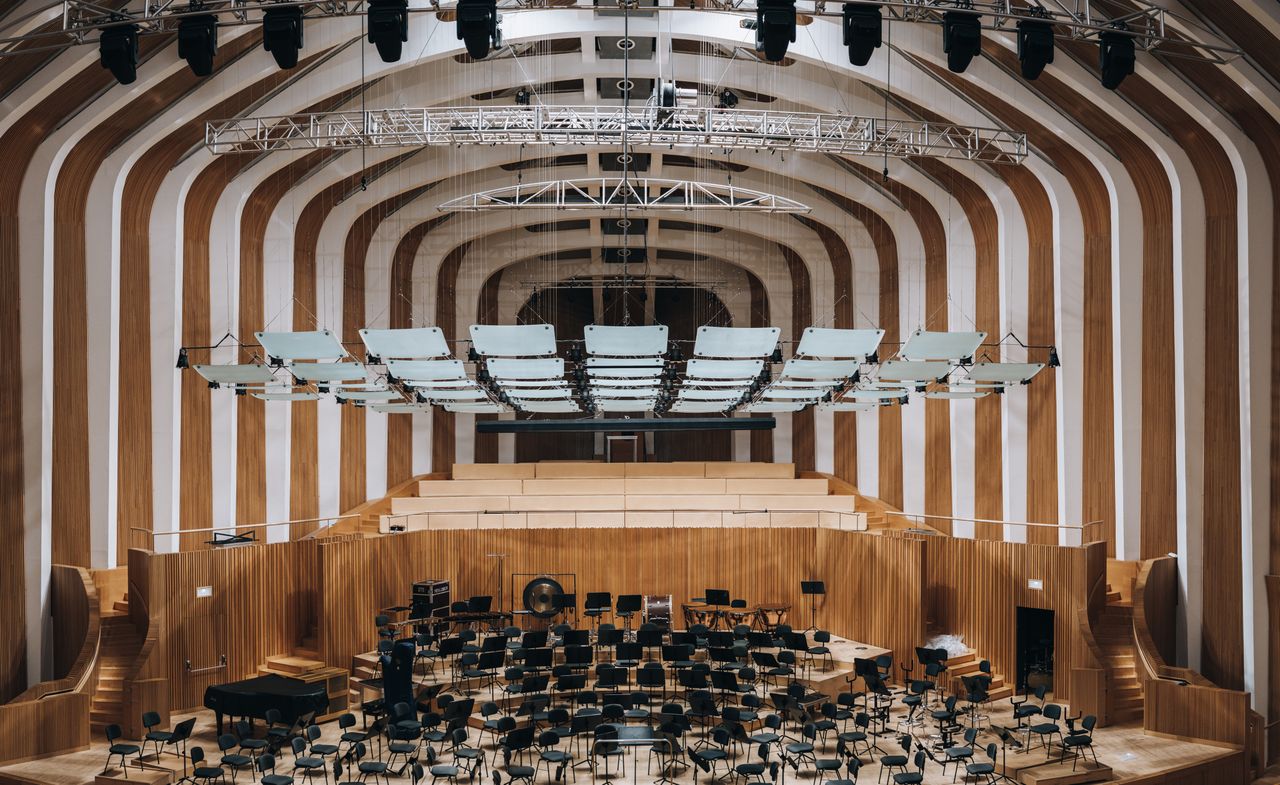
Currently, resonant acoustic panels have become the standard configuration for multi-functional venues such as school auditoriums, conference centers, cinemas and banquet halls. Different from ordinary porous panels that only absorb surface sound waves, grooved and perforated panels eliminate standing waves and low-frequency echoes from the source, effectively optimizing sound field uniformity across all seating areas.
Architectural acousticians recommend combining resonant panels with porous ceiling materials to form a hybrid acoustic system, which is the most scientific solution for large open spaces with complex noise components.