

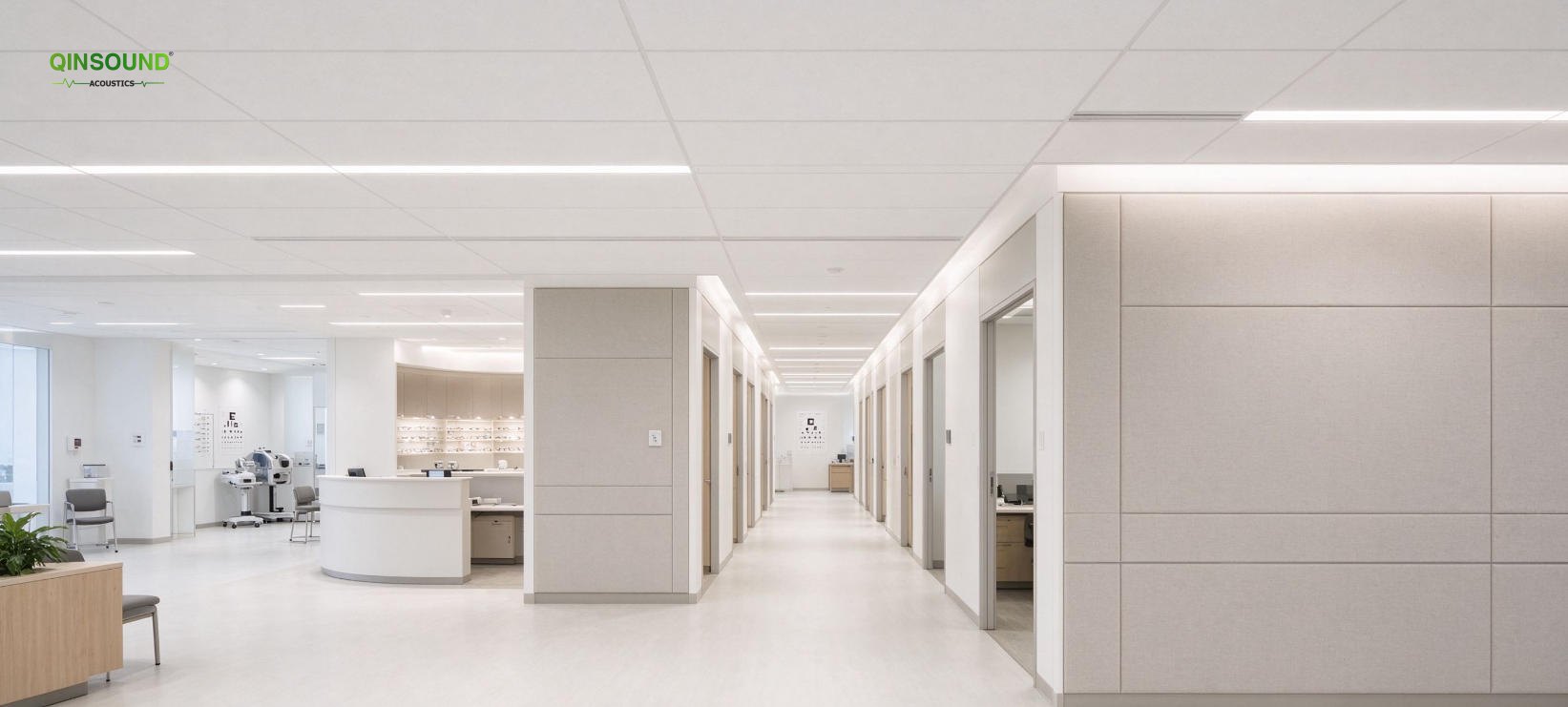
Project Overview
This 2,800 sq ft premium ophthalmology clinic in downtown Seattle includes 8 examination rooms, an optometry testing zone, a retail optical area and a patient waiting lounge. The facility specialises in laser vision correction and premium eye care, with strict requirements for a calm, low-distraction patient environment. Original thin partition walls and hard clinical surfaces caused noticeable sound leakage between rooms, risking consultation privacy and affecting patient response accuracy during vision tests.
Key Acoustic Challenges
- Examination rooms required quiet, low-reverberation conditions to ensure accurate patient responses during diagnostic testing
- Consultation rooms needed guaranteed speech privacy so patients could discuss treatment plans and medical history confidentially
- All acoustic materials had to support regular clinical disinfection and meet US healthcare fire safety and indoor air quality standards
Solution Delivered
All examination and consultation rooms were fitted with fabric wrapped acoustic panels using medical-grade stain-resistant flame-retardant fabric, absorbing internal reflections and reducing cross-room sound transmission. Partition wall cavities incorporated MLV sound insulation layers to boost airborne sound isolation between adjacent rooms without increasing wall thickness. The waiting lounge and retail optical area used high-density fiberglass ceiling tiles to control overall ambient noise and improve announcement clarity. All products meet ASTM E84 Class A fire safety and low-VOC healthcare standards.
Measurable Outcomes
- Inter-room airborne sound isolation reached STC 47, exceeding Washington state medical facility privacy requirements
- Exam room ambient noise levels dropped by 34%, supporting more accurate diagnostic testing
- Patient satisfaction scores for “calm, quiet environment” increased by 39% post-completion
- All acoustic finishes withstood routine clinical disinfection protocols with no performance degradation