

Sound insulation is a key technology for noise control, which aims to block the transmission of sound waves between different spaces and create a quiet and comfortable environment. It is widely used in residential buildings, offices, theaters, factories and other places, and has become an indispensable part of modern life.
The core principle of sound insulation is to block the transmission path of sound waves. Sound spreads in the form of mechanical waves, which can be transmitted through solid, liquid and gas media. Therefore, sound insulation mainly targets these three transmission paths, and achieves the effect of reducing noise by reducing the transmission of sound waves through materials and structures. For solid-borne sound (such as the vibration of walls and floors), sound insulation is usually achieved by increasing the mass and stiffness of the structure or setting vibration isolation layers; for air-borne sound (such as the noise from the street and the sound of conversations), it is mainly blocked by using dense and airtight materials to reduce the penetration of sound waves.
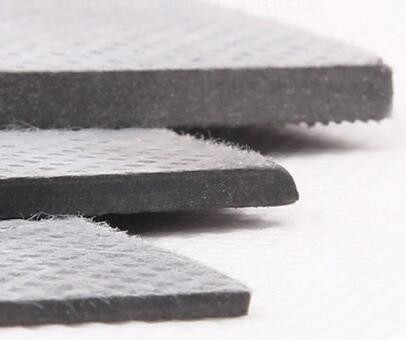
There are many types of sound insulation materials, which can be divided into two categories: rigid sound insulation materials and flexible sound insulation materials according to their properties. Rigid sound insulation materials, such as concrete, brick, double-layer laminated glass and heavy sound insulation panels, rely on their high density and high mass to block the transmission of sound waves. They are suitable for occasions that require high sound insulation effect, such as soundproof walls and soundproof windows. Flexible sound insulation materials, such as sound insulation cotton, rubber and felt, have good elasticity and can absorb part of the sound wave energy while blocking sound transmission, which is often used in the auxiliary sound insulation of pipelines and equipment.
In practical applications, sound insulation is not a single material or structure, but a comprehensive system. For example, in residential buildings, the sound insulation of windows usually adopts double-layer or triple-layer hollow glass, which combines the sound insulation effect of glass and the sound absorption effect of the air layer; the sound insulation of walls will add sound insulation cotton between the wallboards to reduce the transmission of solid-borne sound and air-borne sound. In addition, the tightness of the structure is also an important factor affecting the sound insulation effect. Gaps and cracks will greatly reduce the sound insulation performance, so it is necessary to do a good job of sealing during construction.
With the improvement of people's requirements for living and working environment, the technology of sound insulation is constantly developing. New sound insulation materials and structures are constantly emerging, which not only have better sound insulation effect, but also are more environmentally friendly and energy-saving. Understanding the related knowledge of sound insulation can help us better choose sound insulation solutions and create a quiet and comfortable living and working space.