

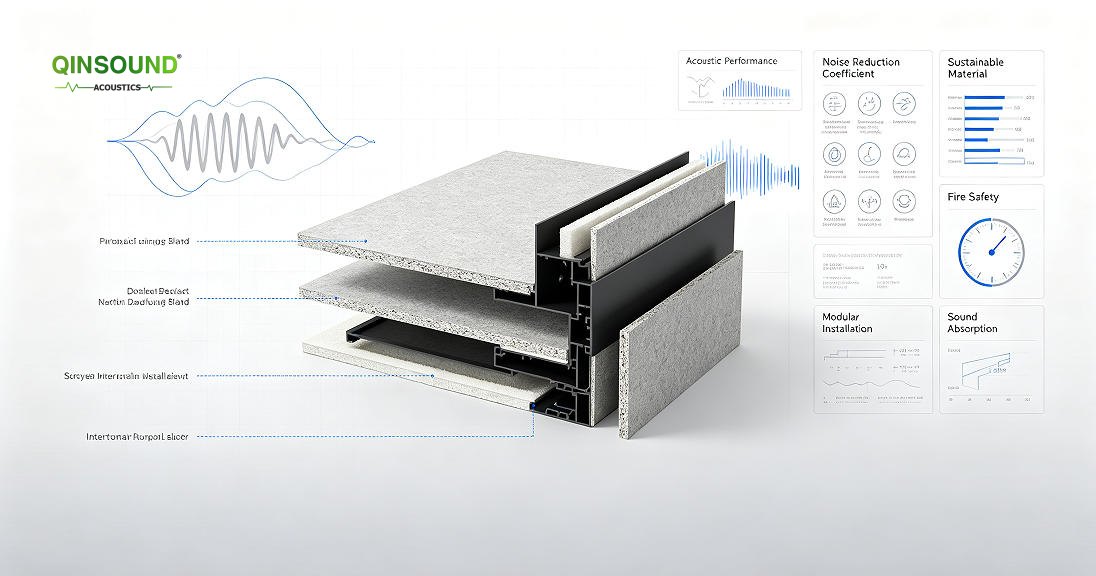
According to surveys by architectural associations in North America and Europe, acoustic design is shifting from post-construction retrofitting to early schematic design integration in commercial, educational and public building projects. More and more architectural firms incorporate acoustic performance indicators into the initial design phase, rather than adding acoustic treatment as a supplementary measure after the main structure is completed. This change is reshaping the competitive landscape of the acoustic materials industry.
This shift puts forward higher requirements for the comprehensive capabilities of acoustic material suppliers. Suppliers that can only provide standalone panel products are gradually being squeezed out of the early design specification process, while suppliers with complete product matrices, scenario-based solution design capabilities and acoustic simulation support are gaining more say in the specification chain. High-quality partners can closely cooperate with architects at the scheme stage, match appropriate acoustic systems according to space function, volume and aesthetic requirements, and provide complete parameter documents including NRC value, fire rating, environmental protection certification and installation structure, so as to ensure both performance and visual integrity.
Industry research institutions predict that by 2028, more than 60% of medium and high-end commercial and public building projects will complete acoustic scheme design at the schematic design stage. Acoustic material suppliers that can provide integrated design services will further expand their market share, and the industry will gradually transform from product-centric competition to solution capability competition.